
A noisy pool pump can sound like grinding, rattling, humming, squealing, or a vibration in the plumbing. Each noise points to different possibilities, from a clogged strainer basket or suction restriction to failing bearings, mounting issues, or an electrical problem that needs professional service.
Table of Contents
- Start With the Sound: Diagnosing Pool Pump Noise by Type
- Pool Pump Troubleshooting: Safe Step-by-Step Checks for Homeowners
- Pool Pump Bearing Noise: Worn, Corroded, and Failing Motor Bearings
- Pool Pump Humming but Not Starting: Electrical and Motor Failure Checks
- Clogged Strainer Baskets, Low Suction, and Restricted Water Flow
- Air Leaks, Cavitation, and Cracked Pump Seals: Quieting the Plumbing Side
- Pool Pump Repair or Replacement: Costs, Time, and How to Decide
- Prevention: Seasonal Startup Checks and Noise Reduction That Lasts
- Frequently Asked Questions
Last Updated: October 8, 2026
Start With the Sound: Diagnosing Pool Pump Noise by Type
Learning how to fix noisy pool pumps starts with listening. A grinding noise points to worn motor bearings, a high-pitched squeal to a dry or failing seal, rattling to loose parts or debris, and a low hum with no water movement to an electrical or motor failure.
Here’s each sound mapped to its likely cause.
Grinding, Squealing, Rattling, or Humming: What Each Sound Points To
Pool pump troubleshooting gets easier once you match the noise to a system. The four most common sounds:
- Grinding or rumbling: Worn or corroded motor bearings. The shaft is metal-on-metal.
- Squealing or screaming: A stiff, cracked, or dry pump seal, or a bearing about to fail.
- Rattling or rubbing: Loose hardware, debris in the impeller, or a vibration against the pad.
A noisy pump rarely fixes itself, and each sound costs more the longer you wait.
Pool Pump Troubleshooting: Safe Step-by-Step Checks for Homeowners
You can safely diagnose most noise problems in about 15 minutes without opening the motor. Work through these checks in order, and always cut power at the breaker first.
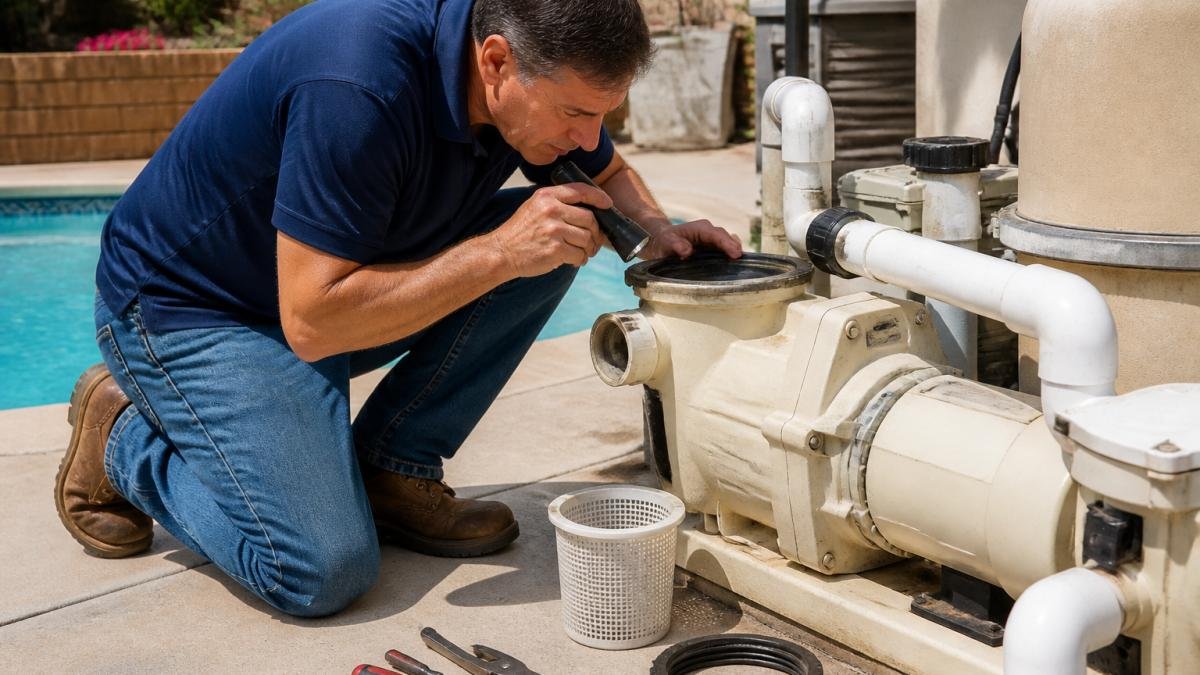
What you’ll need: a flashlight, a garden hose, a screwdriver, and a towel.
- Shut off the breaker. Never inspect a running pump.
- Check the strainer basket. A clogged basket restricts flow and strains the motor.
- Feel the suction. Low suction at the skimmer points to a blockage or air leak.
- Listen while it primes. Air hissing means a leak on the suction side.
- Wiggle the housing. Loose bolts or a worn mount cause rattling.
- Spin the impeller by hand (if accessible) to check for grinding.
Expected result: You’ll know whether the problem is flow, air, or a mechanical failure.
Common Mistakes to Avoid During a Pump Inspection
The biggest mistake is running the pump dry to “see what happens”, that destroys the seal and bearings in minutes. Ignoring a small leak pulls in air and causes cavitation, and flipping the breaker to force a humming motor burns out the capacitor or windings.
Watch Out: Running a pump with a clogged strainer basket or low water level causes cavitation, which pits the impeller and can kill the motor. Fix the flow problem before you run the pump again.
Pool Pump Bearing Noise: Worn, Corroded, and Failing Motor Bearings
Pool pump bearing noise is the most common cause of a loud, grinding pump, and it almost always means the bearings are worn or corroded.
Video reference: Pool Pump Buzzing Noise Fix
In the High Desert, fine dust and hard water speed up corrosion. A bearing that squeals today will grind next month and seize soon after.
Can you replace just the bearings? Sometimes, but it’s a bench job requiring the old bearings to be pressed off the shaft.
Pool Pump Humming but Not Starting: Electrical and Motor Failure Checks
A pool pump humming but not starting usually means the motor is receiving power but the shaft won’t turn. The two most common culprits are a failed start capacitor, cheap and easy to swap, and a seized shaft, often from a worn bearing or debris, which is a bigger repair.
Here’s how to tell them apart:
- Hum for a second, then click off: Likely the capacitor.
- Hum continuously, get hot, trip the breaker: Likely a seized shaft or bad windings.
- No sound at all: Check the breaker, timer, and voltage first.
If you’re not comfortable testing a capacitor with a multimeter, leave it to a pro. Capacitors hold a charge even after power is off.
Clogged Strainer Baskets, Low Suction, and Restricted Water Flow
Restricted flow is the quiet killer of pool pumps. When the strainer basket clogs or the water level drops, the pump pulls harder and moves less water, raising suction pressure, overheating the motor, and producing a strained, growling sound.
Check these flow points:
- Strainer basket: Empty it weekly, more during pool opening and heavy debris season.
- Skimmer and main drain: Clear leaves and debris that block the line.
- Water level: Keep it at the middle of the skimmer mouth.
Pro Tip: Mark your strainer basket cleanings on a calendar during dusty months. In the High Desert, baskets can clog in days, not weeks, and a $0 basket cleaning beats a motor replacement every time.
Air Leaks, Cavitation, and Cracked Pump Seals: Quieting the Plumbing Side
Air entering the system causes many strange pump noises. A small suction-side leak pulls air into the pump, and the impeller chops it into bubbles that collapse violently, cavitation, which sounds like gravel rattling inside the housing.
Common air-leak sources:
- A cracked or stiff pump seal
- A loose strainer lid or bad O-ring
- A cracked union or fitting on the suction line
A cracked seal also drips water, which you’ll see under the pump. Fixing air leaks and worn seals quiets the pump and protects the impeller from cavitation damage, the most overlooked fix in pool pump troubleshooting.
| Sound | Likely Cause | First Check | Fix |
|---|---|---|---|
| Grinding | Worn bearings | Spin impeller by hand | Replace motor |
| Squealing | Dry or cracked seal | Look for drips | Replace seal |
| Rattling | Loose parts, debris | Wiggle housing | Tighten, clear debris |
| Humming, no flow | Capacitor or seized shaft | Test capacitor | Replace part or motor |
Pool Pump Repair or Replacement: Costs, Time, and How to Decide
Most guides stop at “if it’s old, replace it.” What you need is a way to compare the repair in front of you against the cost of a new pump, and how long each option buys you.
Typical Repair Costs and What They Buy You
Repair prices vary by region, pump model, and whether the technician pulls the motor or works on the pad. The ranges below reflect common residential single-speed and variable-speed pumps, ballparks, not quotes.
- Start capacitor replacement: roughly $15-$40 for the part, often under an hour of labor. Buys you years if the motor is otherwise healthy.
- Pump seal and O-ring kit: roughly $20-$60 in parts, one to two hours of labor. Buys you a quiet pump and stops the drip that was pulling in air.
- Motor bearings (bench rebuild): roughly $30-$80 in parts, but two to four hours of shop labor because the shaft has to be pressed apart. Only worth it if the motor housing and windings are still sound.
A single-part repair on a pump under five years old costs a fraction of replacement and restores quiet operation for years. Once you’re stacking two or three repairs on one visit, the math flips.
The Decision Framework
Work through these questions in order. The first one that lands usually decides it.
- Is the pump under 5 years old with one failed part? Repair it. Capacitors, seals, and O-rings are wear items, not signs of a dying pump.
- Is it 5 to 8 years old with two or more failing parts? Compare the repair total against a new motor. If the repair is more than roughly half the cost of a new motor, replace the motor.
- Is it over 10 years old, or has it already been repaired twice in two seasons? Replace the pump. Older motors run hotter, draw more power, and are more likely to fail again within a year.
- Is the pump body cracked, or is the impeller pitted from long-term cavitation? Replace. A pitted impeller can’t be restored, and a cracked housing will keep leaking air no matter how many seals you install.
- Is the motor tripping the breaker or getting hot before it hums? That points to windings, not a wear item. Replacement is usually the honest answer.
Time: What Each Path Actually Costs You
A capacitor or seal swap is often a same-day fix. A motor replacement usually means ordering the motor, so plan on a few days of downtime unless the technician stocks your model. A full pump replacement depends on whether the new pump matches your plumbing unions; if not, expect extra plumbing time.
Key Takeaway: If the repair estimate is more than half the price of a new motor, and the pump is past the midpoint of its expected service life, replacement is almost always the better long-term call. If it’s a single wear item on a young pump, repair wins every time.
Request a free quote and we’ll give you a clear, upfront number before any work starts. No surprise emergency fees.
Prevention: Seasonal Startup Checks and Noise Reduction That Lasts
Most pump noise is preventable, and the prevention happens before the pump ever makes a sound. Two things drive long-term quiet: how the pump is mounted and ventilated, and how carefully you bring it back online after sitting dry all season.
Seasonal Startup: Bring the Pump Back Quietly
A pump that sat drained all winter is the most common source of spring noise complaints. The seal dries out, the O-rings stiffen, and the first dry start can score the impeller before water reaches the housing.
Work through this in order:
- Inspect the strainer basket and lid O-ring for cracks or flattening. Replace the O-ring if it’s stiff.
- Check the pump seal for drips. A dry seal that drips on startup will pull air once the pump is running.
- Confirm the water level sits at the middle of the skimmer mouth before you prime.
Installation and Vibration Control: The Quiet You Can Build In
Noise traveling through the pad and plumbing is often louder than the noise off the motor itself. A few installation choices cut that path.
- Set the pump on a solid, level pad. A rocking pad lets the pump shift, loosening unions and mounts.
- Add rubber vibration pads under the base. These isolate the motor from the concrete and stop the low-frequency hum that carries through a slab.
- Use flexible unions on the suction and return lines. Rigid PVC transmits vibration into the plumbing, where it acts like a speaker.
Watch Out: Never enclose a pump in a sealed box or wrap it in insulation to quiet it. Motors shed heat through the housing and the fan, and trapping that heat shortens bearing and winding life. Quiet the vibration path, not the motor.
Through-Season Habits That Keep It Quiet
- Empty the strainer basket weekly, and more often during heavy debris season.
- Keep the water level steady so the pump never pulls air at the skimmer.
- Backwash or clean the filter on schedule; a dirty filter raises back pressure and makes the pump louder.
For winter storage, drain the pump fully, store it clean and covered, and inspect the seal and O-rings before the next startup. From tile cleaning to pool automation, we keep your whole system working.
Frequently Asked Questions
How to quiet a noisy pool pump?
Start by identifying the sound. A grinding or squealing noise usually points to worn pump bearings, while rattling often means loose parts or debris in the strainer basket. Clean the strainer, check for low suction pressure, and confirm the pump is primed. If the noise continues after these checks, the motor bearings or pump seal likely need replacement. A pool professional can confirm the cause and recommend the right fix.
Why is my pool pump so loud all of a sudden?
A sudden increase in pool pump noise often traces back to a clogged strainer basket, restricted water flow, or air entering the system through a loose valve or cracked seal. Cavitation from low suction pressure also creates a loud rattling or grinding sound. Check the strainer basket first, then inspect plumbing connections for air leaks. If the noise started after a pool opening or seasonal startup, the pump may have run dry briefly.
How long can you run a pool pump with bad bearings?
Running a pump with worn or corroded bearings accelerates damage to the motor shaft and can lead to complete motor failure. There is no safe number of hours to keep running it. Once you hear consistent grinding or squealing, schedule a pump inspection. Continuing to operate the pump risks a more expensive repair or full replacement, and the noise will only get worse over time.
When should I repair or replace a noisy pool pump?
If the pump is under 8 to 10 years old and the noise comes from bearings or a seal, a repair is usually the better value. If the motor has already failed, the housing is cracked, or the pump is near the end of its typical lifespan, replacement makes more sense. Get a professional assessment that weighs repair cost against a new pump’s efficiency and warranty before deciding.
A loud pump is usually a warning, not a mystery. Catch the sound early, fix the flow and air problems, and you’ll avoid the costly motor failure that follows. If the diagnosis points to bearings, a seized shaft, or a pump that’s simply past its prime, don’t wait for it to die mid-season. Request a free quote from Reynolds Pool Service, and our certified team will inspect your equipment, explain your options in plain language, and get your pool running quiet again.
Explore our High Desert pool services for on-site help.