Pool heater troubleshooting should begin with the display code, thermostat setting, water flow, and filter condition, not by opening the gas train or electrical cabinet. Pool heaters depend on correct circulation and properly functioning safety switches. Shut the unit down and seek qualified help if you smell gas, see damage, or encounter repeated ignition faults.
Table of Contents
- What You’ll Need Before You Start
- Pool Heater Not Heating? Start With These Checks
- How to Decode Pool Heater Error Codes
- Pool Heater Keeps Shutting Off: Causes and Fixes
- Pool Heater Low Water Flow: Step-by-Step Diagnosis
- Common Mistakes to Avoid When Troubleshooting Common Pool Heater Problems
- When to Call a Professional for Pool Heater Repair
- Frequently Asked Questions
Last Updated: October 12, 2026
What You’ll Need Before You Start
Troubleshooting common pool heater problems starts with safety and the right tools, not guesswork. Before you touch a panel or open a gas valve, gather a few basics and confirm the heater is fully off at the breaker.
Here is what to have on hand:
- Owner’s manual with the error code chart
- Digital multimeter for voltage checks
- Soft brush and garden hose for cleaning
- Flashlight for burner compartment work
- Notepad to log what you find
At Reynolds Pool Service, we see the same pattern across the High Desert: a heater quits, the homeowner guesses, and a small issue becomes a parts bill. Two minutes of prep prevents most of that.
Watch Out: Never open the burner compartment while the gas valve is on. If you smell gas at any point, stop, leave the area, and call your gas utility from a safe location.
Pool Heater Not Heating? Start With These Checks
When a pool heater is not heating, the cause is usually power, ignition, or gas supply. Work through these three checks in order before assuming the worst.
Check the Display and Power Source
A blank or flickering display points to an electrical fault, not a heating fault. Confirm the breaker is on and the heater’s own switch is set to “Pool” or “Spa.” If the panel is dead, test for voltage at the heater’s junction box with your multimeter. No power there means the problem is upstream at the breaker or timer, not inside the heater.
Inspect the Ignition System
Most modern heaters use either a hot surface igniter or a direct spark ignition. Listen for the click of the spark or watch for the igniter to glow orange. No glow and no click means the ignition system needs service. A cracked igniter is a common failure and an easy one to spot with a flashlight.
Verify Thermostat and Gas Supply
Set the thermostat well above the current water temperature. If the heater still won’t fire, check that the gas valve is open and that other gas appliances in the home work. A heater that clicks but never lights is often starved of gas or tripping a safety switch.
How to Decode Pool Heater Error Codes
Pool heater error codes are short diagnostic messages that tell you which safety circuit tripped. They are the fastest path to the real problem, so read the code before you do anything else.
Common Error Code Categories
Most codes fall into four groups:
- Ignition faults: the heater tried to light and failed
- Water flow faults: not enough water moving through the unit
- High-limit faults: the unit got too hot and shut down
- Sensor faults: a temperature or pressure sensor is reading wrong
What to Do When You See a Code
Write the code down, then check the manual’s chart. A code is a starting point, not a verdict. For example, a flow code can mean a dirty filter or a bad pressure switch, and the fix is very different for each.
Pro Tip: Photograph the code with your phone before you reset anything. If the fault returns, you’ll have the exact code ready for your service tech, which saves a diagnostic visit.
Pool Heater Keeps Shutting Off: Causes and Fixes
A pool heater keeps shutting off because a safety device is doing its job. The unit is protecting itself from heat, low flow, or a bad sensor reading. Find which one tripped and the shutdown stops.
Check for High-Limit Trips
The high-limit switch cuts power when the internal temperature climbs too high. Poor water flow or a dirty heat exchanger is the usual cause. Clean the filter, confirm the pump is running at full speed, and check that the bypass valve is set correctly.
Inspect the Flame Sensor and Thermistor
A dirty flame sensor can’t confirm the burner lit, so the heater shuts down seconds after firing. A failing thermistor sends wrong temperature readings, causing short cycles. Both parts are inexpensive, but testing them takes a multimeter and a steady hand.
Pool Heater Low Water Flow: Step-by-Step Diagnosis
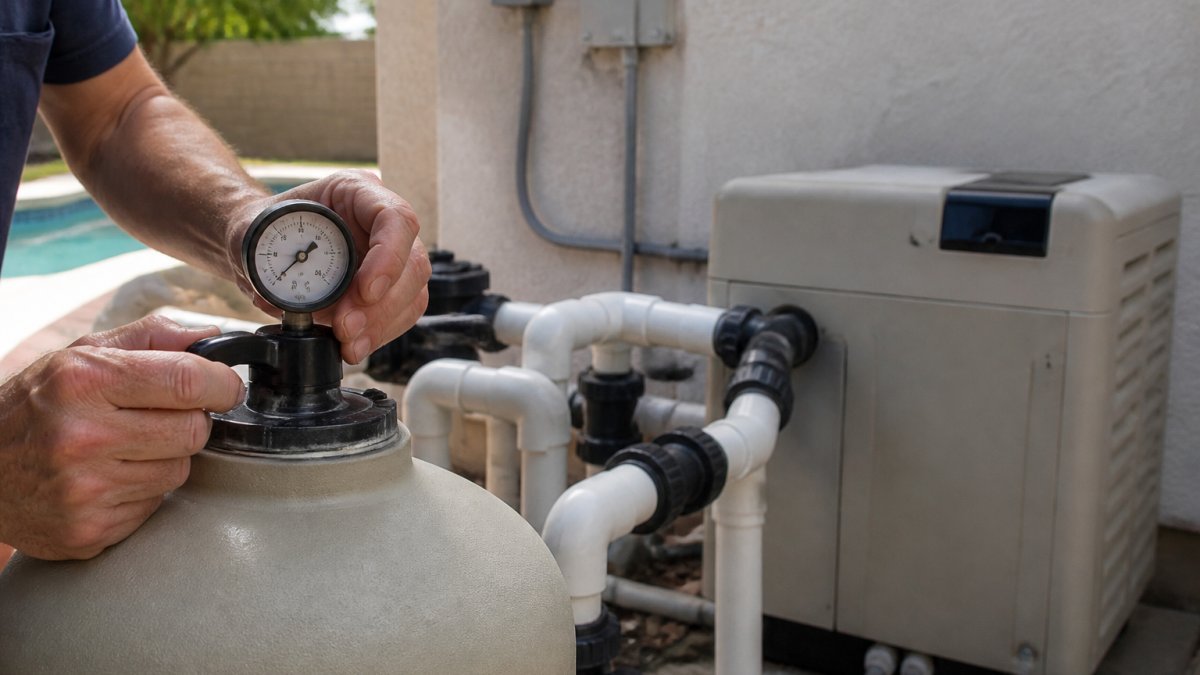
Pool heater low water flow is the most common reason a heater locks out, and the fix is often simple maintenance. Low flow triggers the pressure switch, which shuts the burner off to protect the heat exchanger.
Check the Filter and Pump Basket
Start at the filter. A clogged cartridge or a full pump basket restricts flow and starves the heater. Clean both, then watch the pressure gauge. A reading well above the clean baseline means the filter needs attention.
Inspect the Pressure Switch and Bypass Valve
The pressure switch tells the heater that water is moving. If it fails or reads low, the heater won’t fire. The bypass valve controls how much water flows through the heater; if it’s set wrong, flow drops. Adjust it per the manual and retest.
Common Mistakes to Avoid When Troubleshooting Common Pool Heater Problems
The biggest mistake is replacing parts before confirming the fault. Homeowners often swap an igniter when the real issue is gas supply or flow. That wastes money and time.
Other common errors:
- Resetting the heater repeatedly instead of reading the code
- Ignoring a dirty filter because the pool “looks clean”
- Running the heater with the pump off
- Skipping the annual heat exchanger cleaning
Most of these come down to one habit: treat the code and the flow first, and parts last.
When to Call a Professional for Pool Heater Repair
Call a professional when the problem involves gas, the heat exchanger, or repeated lockouts after you’ve cleaned the filter and checked flow. Gas work and refrigerant handling require licensed technicians and the right tools.
At Reynolds Pool Service, our Certified Pool Operators handle heater diagnostics and repairs across the High Desert. We check flow, ignition, and sensors in one visit, so you’re not paying for guesswork.
Key Takeaway: If a heater locks out twice after you’ve cleaned the filter and confirmed good flow, stop resetting it. Repeated lockouts usually mean a failing sensor or heat exchanger that needs a pro.
A heater that keeps quitting is more than an inconvenience; it’s a sign that something in the system needs attention before it fails completely. Reynolds Pool Service offers expert heater repair, professional tile cleaning, and pool automation that keeps your equipment running without the guesswork. As a locally operated team with Certified Pool Operators, we handle diagnostics and repairs so you can get back to enjoying your pool. Request a free quote and let us take the stress out of pool care.
Frequently Asked Questions
Why is my pool heater not heating the water?
Start by confirming the heater has power and the thermostat is set above the current water temperature. If the display is on but the water stays cold, check the gas supply and listen for the ignition sequence. A dirty filter or closed valve can also restrict flow, causing the heater to lock out. If these checks don’t solve it, the issue may be a faulty igniter, flame sensor, or control board, which requires a professional diagnosis.
Why does my pool heater turn on but not heat?
When the heater powers on but doesn’t warm the water, the most common culprits are a failed igniter, a dirty flame sensor, or low water flow preventing the pressure switch from closing. Check the filter and pump basket first. If the heater fires for a few seconds then shuts down, the flame sensor likely needs cleaning or replacement. Persistent issues point to a gas supply problem or a bad control board.
Can low water flow prevent a pool heater from working?
Yes. Most heaters have a pressure switch that prevents firing when flow is too low. A clogged filter, a pump basket full of debris, or a partially closed valve can reduce flow enough to trigger a shutdown. Clean the filter, empty the pump basket, and open all valves fully. If flow is restored but the heater still won’t fire, the pressure switch itself may be faulty.
How do I know if my pool heater needs professional repair?
If you’ve checked power, gas, water flow, and the filter, and the heater still won’t heat or keeps shutting off, it’s time to call a professional. Error codes that return after a reset, a heater that trips the breaker, or any smell of gas are clear signs. A certified technician can test the igniter, flame sensor, and control board safely and accurately.