Waterline Calcium Ring: Is It Calcium or Algae? How to Tell
That line at the waterline is one of the most common pool complaints in the High Desert. The tricky part is this: it can look like the same “ring,” but it can come from two very different problems—calcium scale or algae/organic buildup.
Problem → Cause → Solution: A waterline ring usually comes from either mineral scale or organic growth; High Desert heat, evaporation, and hard water can speed up both; the right fix depends on which one you actually have.
If you want the fastest path to a clean, even waterline, start with the quick checks below. If it’s calcium scale (most common here), professional pool tile cleaning removes it evenly without beating up the surface.
Reynolds Pool Service supports High Desert pool owners with the issues that actually show up in real backyards—hard water scale on tile, equipment that won’t stay consistent, and systems that are hard to manage day to day.
Calcium vs Algae at the Waterline: The Simple Differences
Here’s the easiest way to think about it:
- Calcium scale is a mineral deposit. It usually looks white or gray and feels rough—like sandpaper or chalk.
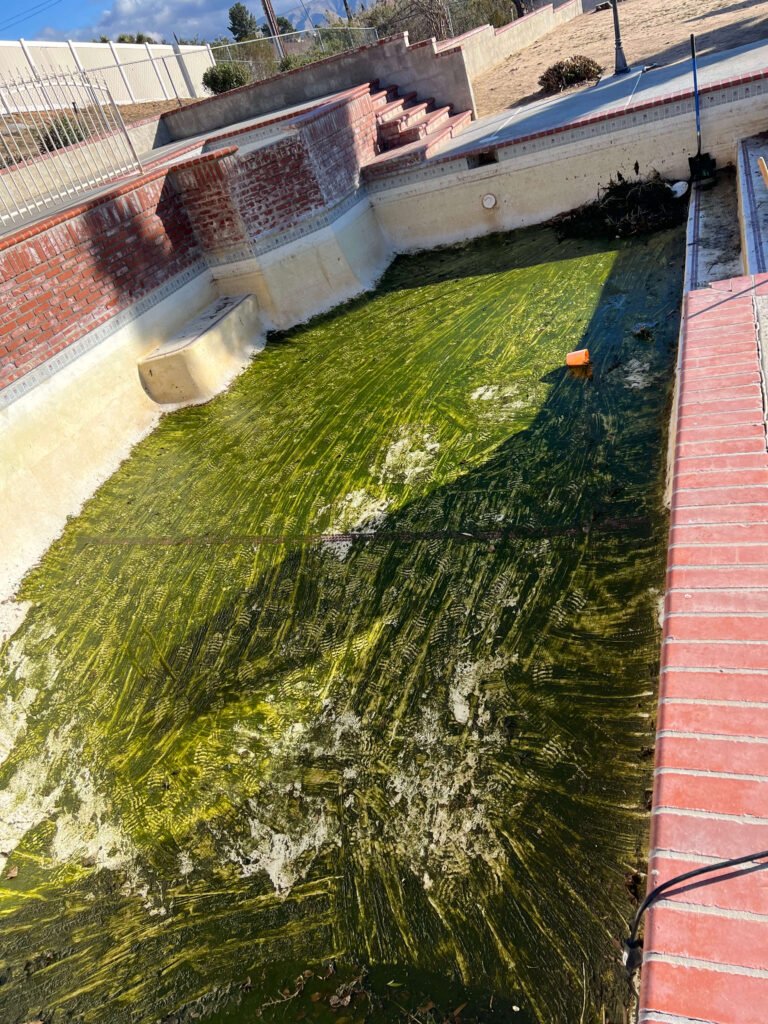
- Algae/organic buildup is living growth or grime (oils, sunscreen, dust). It often looks green, brown, or dark and feels slimy or smears when you rub it.
7 Quick Tests to Tell What Your Ring Really Is
You don’t need lab gear. You just need a few simple checks that point you in the right direction.
- The texture test (most reliable)
Run your finger over the line (carefully). Rough and crusty usually means calcium scale. Soft, slick, or slimy usually means algae/organic film. - The smear test
Rub it with a white rag or paper towel. If it smears or transfers color (green/brown/gray film), that points to algae or grime. If it barely smears and feels like a hard deposit, that points to scale. - The color test
White/light gray is commonly scale; green can suggest algae. But color alone is not enough—sunlight and dust can fool you. - The “spot scrub” test
Try a pool-safe nylon brush on a small spot for 30–60 seconds. Algae/film often lightens quickly. Calcium scale usually does not. - The chlorine response test
If you correct chlorine and brush daily for a few days, algae usually improves. Calcium scale usually stays put because it’s not alive. - Where it builds
Scale loves spillways, raised spa lips, and the exact evaporation line. Organic film often gathers where swimmers touch, where sunscreen sits, and in dead spots. - How long it took to form
Scale often builds slow and steady as water evaporates and leaves minerals behind. Algae can show up fast when sanitizer dips or circulation is off.
In many pools, it’s actually a mix: a hard mineral base with a thin organic film on top. That’s why the fix is sometimes “two-step.” Many pool guides describe waterline rings as coming from both mineral deposits and organic buildup, depending on conditions. :contentReference[oaicite:0]{index=0}
If It’s Calcium Scale: What Works (and What Usually Doesn’t)
Calcium scale is tied closely to evaporation and hardness minerals. In hot, dry climates, evaporation concentrates minerals and leaves deposits at the waterline. :contentReference[oaicite:1]{index=1}
Best options (realistic)
- Professional tile cleaning (best for thick/consistent scale): removes scale evenly across the full waterline so it doesn’t look patchy afterward. Start here: pool tile cleaning.
- Early-stage scale: light buildup can sometimes be managed faster, but you still want to avoid scratching or dulling the finish.
What usually disappoints homeowners
- “More brushing” alone: it rarely removes hardened scale.
- Random harsh acids: they can create uneven results or damage grout/tile if used incorrectly.
- Abrasives on the wrong surface: you can scratch tile, stone, or finishes if you use the wrong tool.
If you’re comparing cost and methods, this pairs well with: Pool Tile Cleaning Cost in the High Desert (Real Price Factors).
If It’s Algae or Organic Film: What to Do First
If your tests point to algae/film, your first moves are simple:
- Brush the waterline daily for a few days (focus on the ring).
- Confirm sanitizer is steady and circulation is consistent.
- Clean out oils and grime (waterline film can be a mix of body oils, sunscreen, and dust).
If it keeps coming back quickly, that’s often a sign something in the routine is inconsistent. You can see all the ways we help with that here: pool services.
When to Stop Guessing and Get It Handled
It’s time to call it in when:
- the ring feels hard and crusty around most of the pool
- you’ve brushed and balanced but the line doesn’t change
- the deposit is thick on a spillway or raised spa
- you’re worried about scratching tile or stone trying DIY tools
Reynolds Pool Service works in Apple Valley, Victorville, and Hesperia. Confirm coverage here: service areas. Then request a quote here: contact us.
Next Step: Get the Waterline Cleaned Evenly (So It Looks Right)
If the ring is calcium scale, the goal is a clean waterline that looks even in full sun—not spot-cleaned in a way that leaves visible “clean zones.” Start with pool tile cleaning, and if you’re ready to book, use the contact page.
Waterline Ring FAQ: Calcium vs Algae (Quick Answers)
Why is there a white line around my pool?
Usually it’s mineral scale (often calcium) left behind as water evaporates at the waterline; sometimes it’s a mix of minerals and organic film.
What is the white ring around my pool waterline?
Most often it’s calcium scale—especially in hot, dry climates where evaporation concentrates minerals right at the waterline.
How do you get rid of a white ring around a pool?
First identify if it’s mineral scale or organic film; scale typically needs scale-removal methods (often professional cleaning for thick deposits), while organic film responds to brushing and proper sanitation.
How can I tell if my pool waterline ring is calcium or algae?
Calcium feels rough and crusty and doesn’t smear much; algae/film tends to feel slick and can smear color onto a rag when you rub it.
Will brushing remove calcium scale on pool tile?
Brushing helps prevent buildup from hardening, but it usually won’t remove hardened scale once it’s bonded to the tile.
Do I need professional tile cleaning for a High Desert calcium ring?
If the ring is thick, widespread, or on a raised spa/spillway, professional tile cleaning is usually the safest way to remove it evenly and avoid surface damage.