Last Updated: October 23, 2026
Quick Summary
Pool tile cleaning service cost varies by pool size, calcium buildup severity, and removal method used. Light waterline film costs less than heavy scale requiring bead blasting or acid treatment, with prices rising as deposits thicken and require more aggressive techniques.
- Light waterline film involves labor-only hand scrubbing with mild descaling product at the low end of pricing.
- Heavy or multi-year scale deposits may exceed $1,000 on larger pools and require bead blasting, pumice, or acid washing.
- Tile area and pool perimeter are the single most predictable cost driver, with doubled waterline footage roughly doubling labor cost.
- Professional tile cleaning saves time and reduces damage risk compared to DIY methods, which often fall short on moderate to heavy buildup.
- Request written quotes that specify the method, linear footage assumed, and whether chemicals and cleanup are included to compare contractors accurately.
Table of Contents
- What Pool Tile Cleaning Service Costs
- Pool Tile Calcium Removal Cost: Pricing by Buildup Severity
- Pool Tile Repair Cost When Damage Goes Beyond Cleaning
- Pool Deep Cleaning Cost and How It Differs from Routine Tile Cleaning
- Professional Pool Tile Cleaning vs. DIY: Cost and Effort Comparison
- Factors That Affect Your Pool Tile Cleaning Service Quote
- How to Get an Accurate Tile Cleaning Quote and Avoid Surprises
- Frequently Asked Questions
What Pool Tile Cleaning Service Costs
Pool tile cleaning service cost varies by scope, pool size, and calcium buildup. Most homeowners pay for light maintenance to extensive calcium removal on larger pools.
Routine waterline cleaning costs less than full restoration with specialized removal techniques. Knowing what drives the quote helps you budget and avoid surprises.
At George Reynolds Pool Service, we assess each pool individually and walk you through what your situation requires and what it will cost.
Get multiple quotes before deciding. Different contractors use different methods, some hand-scrub, others use pressure washing or acid treatments, and the method chosen directly affects the price and timeline.
Pool Tile Calcium Removal Cost: Pricing by Buildup Severity
Calcium removal most often separates a modest tile cleaning bill from a four-figure one. Read a quote by separating three things: tile area, deposit thickness and chemistry, and removal method, those variables explain almost every price difference.
A practical standalone range for tile cleaning only covers most residential pools. Treat that as a planning band, not a quote, since method and access move the number either way.
Severity tiers and what they mean for price
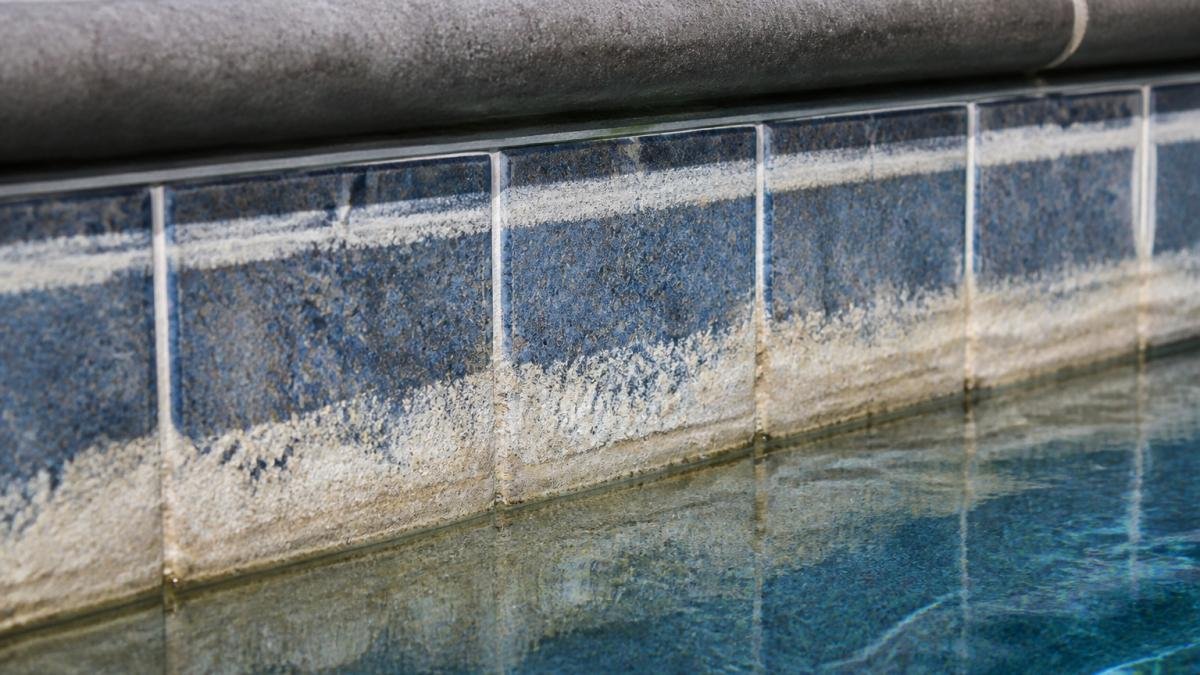
Light waterline film. A thin white or gray band at the waterline, soft enough to remove with a hand scrub and mild descaling product. This tier involves labor-only, with no specialized equipment.
Moderate scale. Thicker deposits, rough texture, and discoloration along grout lines. Needs stronger descaling chemical, longer dwell time, and more scrubbing passes, pushing the price to the middle of the range.
Heavy or multi-year scale. Deposits thick enough to change the tile’s texture, often with calcium bonded into grout. Methods diverge here, bead blasting, pumice, or acid washing, each with different labor, equipment, and risk. Can exceed $1,000 on a larger pool.
Method-by-method price and risk comparison
The method a contractor chooses trades off speed, effectiveness, and risk to tile and grout.
- Hand scrubbing and brushing. Lowest equipment cost and risk, most labor hours. Best for light film and delicate tile. Low-end pricing.
- Pumice stones. Effective on hard waterline rings and safe on most ceramic tile when used carefully, but slow and labor-intensive. This method typically falls into a mid-range pricing category, which can be higher on large perimeters.
- Chemical descaling. Descaling acid or commercial scale remover applied and rinsed. Faster than hand work on moderate scale, but requires careful dilution, PPE, and water management. This method typically falls into a mid-range pricing category; chemicals are sometimes billed separately.
- Pressure washing. Fast on flat surfaces but risky on grout and older tile; incorrect pressure can erode grout and force water behind tiles. This method typically falls into a mid-range pricing category with real damage risk.
- Glass-bead blasting (bead blasting). The most effective option for heavy calcium and the standard for restoration-level work. Requires specialized equipment and masking, so it commands the top of the range, but delivers a uniform result on badly scaled tile.
Rule of thumb: the more aggressive the method, the higher the price, and the more important it is to confirm the contractor carries liability insurance and has experience with your tile type.
Estimating by tile area and pool perimeter
Tile cleaning is priced partly by area, so know your linear footage of waterline tile. A small pool with 60 to 80 linear feet is a very different job from a large pool with 150 to 200.
To estimate your range, multiply waterline linear footage by a per-foot rate reflecting severity, lower for light film, mid for moderate scale, higher for heavy scale requiring blasting or acid, then add setup, water management, and chemical charges.
A quote that is far below what you expect for your severity tier usually means one of three things: the contractor has not inspected the pool, plans to use a weaker method than the job needs, or will bill extras later. Ask which method is priced and what happens if the scale turns out to be heavier than expected.
Price calcium removal by three inputs: tile area, severity tier, and method. A standalone tile-cleaning service covers most residential pools, with heavy scale and blasting pushing toward the top.
Pool Tile Repair Cost When Damage Goes Beyond Cleaning
Sometimes what looks like calcium buildup is actually tile damage or grout deterioration. If tiles are cracked, chipped, or grout is crumbling, cleaning alone won’t solve it, you’ll need repair or replacement.
Damaged grout often requires regrouting, a separate service from cleaning, and cracked tiles need individual replacement.
When you get a quote for pool tile cleaning service cost, confirm whether the contractor is addressing only surface staining or has identified underlying damage.
George Reynolds Pool Service includes a thorough assessment in our quote process, identifying what can be cleaned versus what needs repair so you understand the full scope before work starts.
Pool Deep Cleaning Cost and How It Differs from Routine Tile Cleaning
Pool deep cleaning cost covers more than tile surfaces: tile cleaning, filter cleaning, equipment inspection, and thorough brushing of pool walls and floor.
Routine tile cleaning focuses on tile surfaces and the waterline, staining and buildup on visible tile. Deep cleaning goes further, covering the full pool interior, equipment servicing, and a more intensive overall refresh.
The cost difference reflects scope: routine tile cleaning is narrower and faster, while deep cleaning requires more labor hours and equipment attention.
In the High Desert, deep cleaning matters more because dust, debris, and mineral-heavy water accelerate buildup. A deep clean every six months helps prevent the heavy calcium accumulation that becomes expensive later.
Professional Pool Tile Cleaning vs. DIY: Cost and Effort Comparison
The DIY approach to pool tile cleaning service cost elimination sounds appealing until you factor in the actual work involved.
Hand-scrubbing tiles with a brush and mild cleaner works for light staining but becomes exhausting on larger pools.
Chemical treatments you can purchase for home use exist, but they require careful handling, proper dilution, and safety precautions. Acid treatments require professional knowledge to apply safely without harming pool surfaces or equipment (the CDC).
The time investment for DIY tile cleaning typically exceeds what most busy homeowners can realistically commit. A professional crew completes in hours what might take you an entire weekend.
Cost-wise, purchasing cleaning supplies, renting equipment, and accounting for your time can be comparable to what a professional service charges. The difference is that professionals have experience, proper equipment, and liability insurance.
Professional tile cleaning saves time and reduces the risk of damage to your pool surfaces. For most homeowners, the convenience and quality results justify the service cost.
Factors That Affect Your Pool Tile Cleaning Service Quote
Most articles list the same factors: pool size, buildup, tile type, method, and location. That list is true but not useful, because it does not tell you how much each factor moves the price. The more practical approach is to treat a tile cleaning quote as a build-up of four priced components, then see which factors change each one.
The four components of a tile cleaning quote
- Labor. Priced by hours or by linear footage of tile. This is the largest component and the one most affected by pool size, access, and severity.
- Method and equipment. Hand tools cost little; blasting rigs, pressure washers, and chemical application equipment add cost. The method chosen for your severity tier sets this component.
- Chemicals and consumables. Descaling acid, neutralizers, pumice, and blast media. Some contractors include these; others bill them separately, which is a common source of quote confusion.
- Setup, water management, and cleanup. Draining down to expose tile, containing runoff, protecting landscaping, and rinsing. On pools with tight access or strict runoff rules, this component can be larger than owners expect.
How each factor moves the number
Tile area and pool perimeter. The single most predictable driver. More linear feet means more labor and more chemical.
Deposit severity. Sets the method, and the method sets the equipment and chemical cost.
Tile and grout condition. Delicate tile, older grout, or previously damaged surfaces limit which methods are safe.
Access and water management. Tight side yards, locked gates, and strict runoff containment add setup time.
Add-ons. Filter cleaning, equipment inspection, and water chemistry balancing are separate line items. Bundling them can be cheaper than buying each alone, but confirm they are actually included rather than assumed.
A simple way to compare quotes
Ask every contractor to break the quote into the four components above. Two quotes with the same total can have very different scopes: one may include chemicals and runoff containment, the other may bill them later. Comparing component by component is the only reliable way to know which quote is actually lower for the same work.
Ask for the quote in writing with the method named, the linear footage assumed, and whether chemicals and cleanup are included. A quote that names the method and the footage is far easier to compare than a single lump sum.
The factors that matter are the ones that change labor, method, chemicals, or setup. Ask for a component-level quote and you will spot the real differences between contractors.
How to Get an Accurate Tile Cleaning Quote and Avoid Surprises
Start by measuring your pool’s dimensions and calculating the approximate linear footage of tile. This gives contractors a baseline for quoting.
Request an in-person inspection before final pricing.
Ask contractors to specify what’s included in their quote.
Request references from recent customers in your area.
Compare at least two or three quotes. Pricing varies by contractor, method, and market conditions. The lowest quote isn’t always the best; a contractor who’s significantly cheaper may be cutting corners or using less effective methods. The highest quote isn’t necessarily the best either.
George Reynolds Pool Service provides free quotes for pool tile cleaning and other services.
Pool tile cleaning protects your pool’s appearance and extends the life of your tile and grout.
George Reynolds Pool Service specializes in professional tile cleaning and pool automation for homeowners and commercial properties across the High Desert.
Frequently Asked Questions
What is the average cost of professional pool tile cleaning?
Professional pool tile cleaning varies depending on pool perimeter, calcium severity, and cleaning method. Waterline-only cleaning costs less than full-tile service. Your actual quote depends on pool size, buildup extent, and whether additional services like chemical balancing are included. Request a quote from a local professional to get accurate pricing for your specific pool.
How much does pool tile calcium removal cost compared to other cleaning methods?
Standard pressure cleaning runs lower than specialized calcium removal. Heavy calcium deposits require glass-bead blasting or acid-based removal, which costs more due to equipment and expertise. Minor waterline buildup costs less, while severe calcium across the entire tile surface can be more expensive. The method used, pressure washing, acid wash, or blasting, directly affects the final price.
Is professional pool tile cleaning worth the cost versus doing it yourself?
Professional cleaning saves time, prevents tile damage from incorrect techniques, and handles stubborn calcium deposits that DIY methods struggle with. Homeowners attempting acid washing or pressure cleaning risk cracking grout, damaging tile, or creating safety hazards. For routine maintenance, DIY brushing is cost-effective; for heavy buildup or waterline scale, professional service delivers better results and protects your pool investment.
How often should I have my pool tiles professionally cleaned?
Most pools benefit from professional tile cleaning 1-2 times per year, depending on dust, debris, and local water chemistry. Pools in arid regions with hard water accumulate calcium faster and may need cleaning every 6 months. Routine brushing between professional visits slows buildup. Your technician can recommend a schedule based on your pool’s condition and environment.
